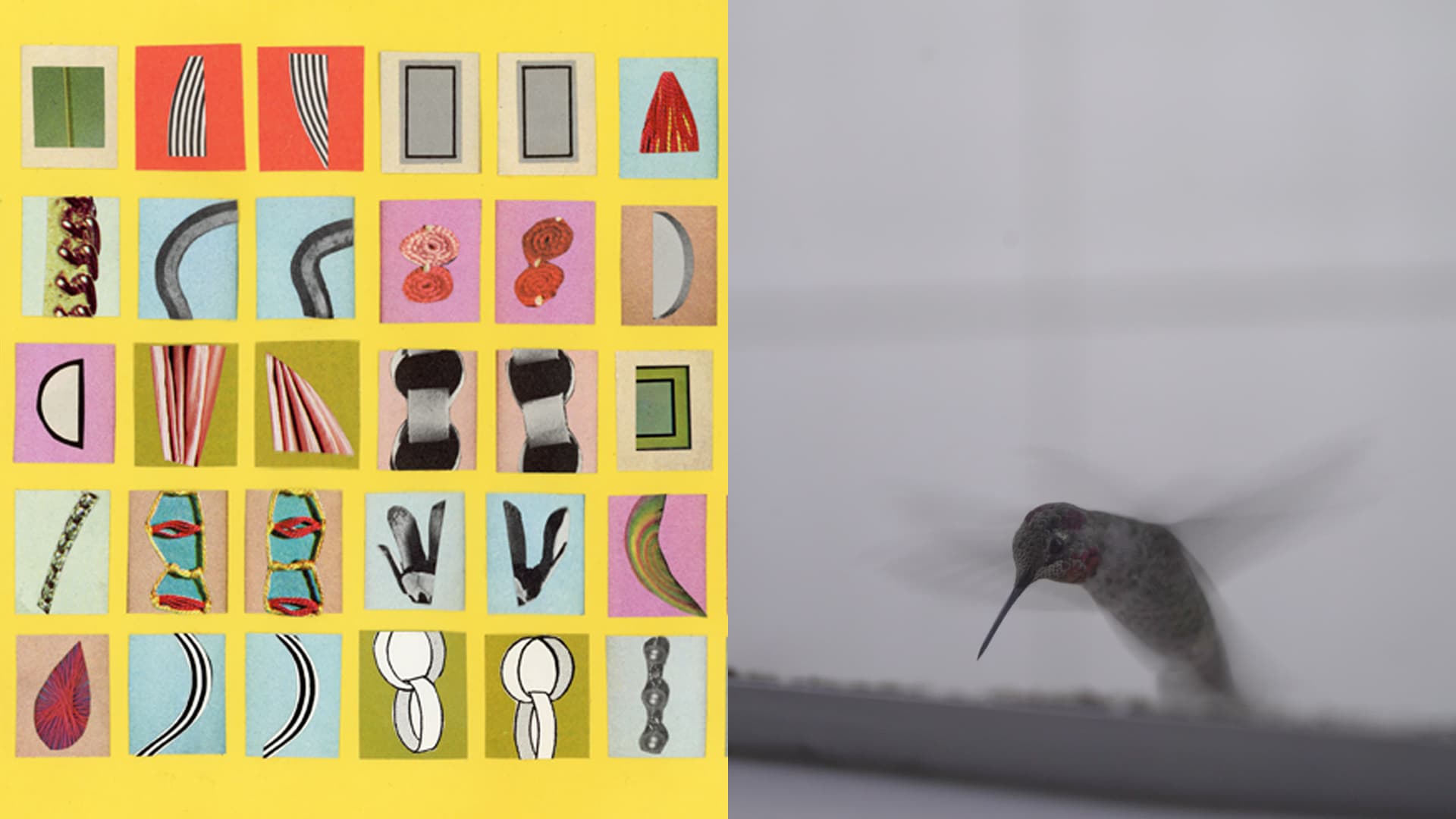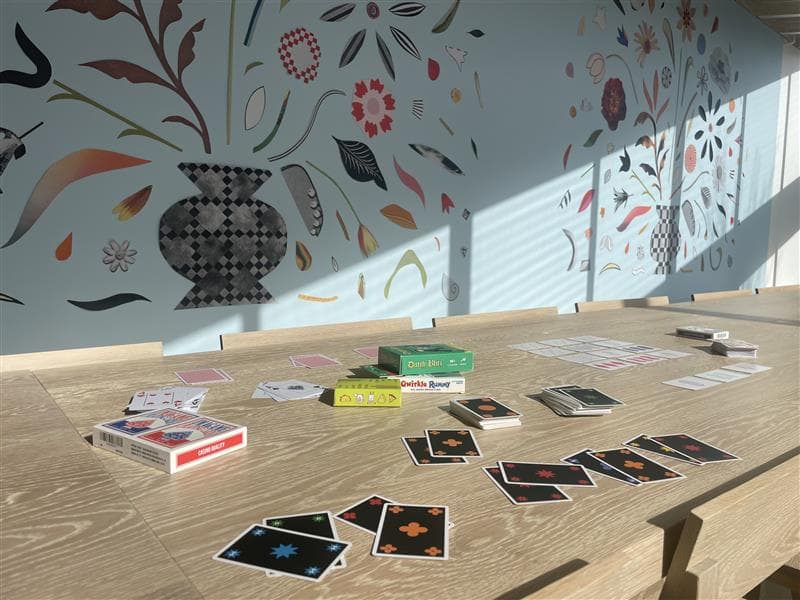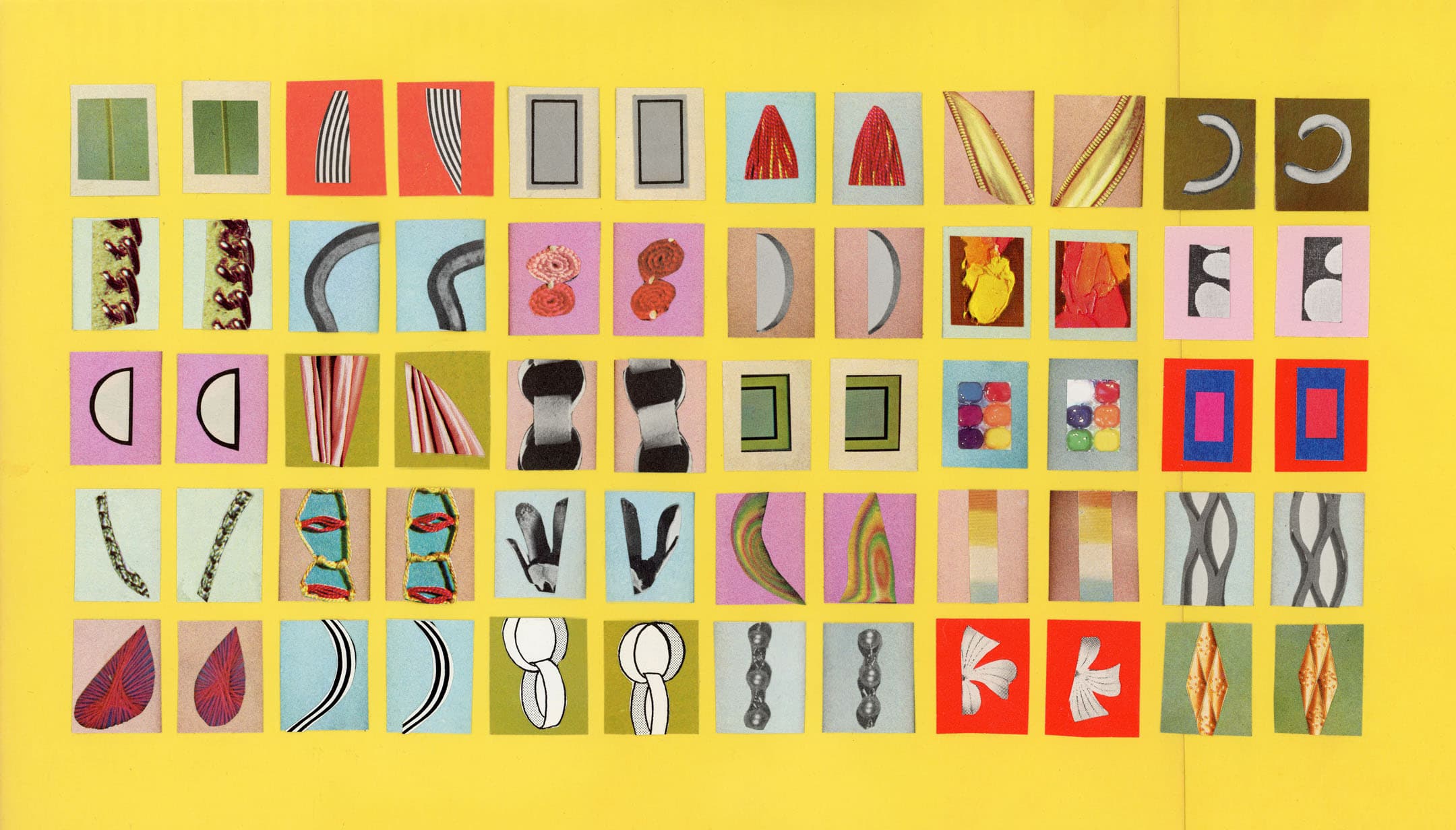
Over the past two years, Maggie Groat’s material research has explored the possibilities of slowness, play, sleep, and healing as acts of resistance and refusal. S LOWER F: ACTIVITY BOOK is the fourth chapter of this ongoing project. Using her characteristic methods of analog collage and assemblage, Groat harnesses the Gibson’s open concept galleries to experiment with familiar forms of visual games, including spot-the-difference, concentration, fill-in-the-blanks, dot-to-dot, the colouring sheet, and hidden images. The exhibition proposes open-ended rules of play, and invites imaginative interaction by visitors of all ages.
Groat’s proposed visual engagement with these images-as-games mirrors the methods of their creation, as collage involves an inherently slow yet playful process, and demands a rigorous kind of deep looking. The found images collected for S LOWER F: ACTIVITY BOOK highlights the artist’s persistent interest in locating matches, doubles, twins, mirrors, and imperfect symmetries as a kind of “glitch,” by sourcing and transforming a particular kind of twentieth century pre-internet era print media.
Groat’s interest in games springs from their world-building possibilities—as a strategic coping strategy for life in difficult times but also, and perhaps more powerfully, as a philosophical exploration of other realities. For Groat, game playing should not exist solely in the domain of childhood. S LOWER F: ACTIVITY BOOK encourages its visitors to remember the deep, slow focus of competitive concentration, and the role of immersive imagination as a means for living together through intersecting emergencies.
S LOWER F: ACTIVITY BOOK also exemplifies the ethics that ground Groat’s artistic practice. Through it she considers and enacts the possibilities of low-impact exhibition making, including utilizing second-hand and sustainable materials, small-scale shipping, no-travel, designed from the outset in collaboration and conversation with the Gibson team. Through these material choices, Groat engages with considerations of how to address the environmental impacts of our time, and what it means to be a maker during the destructive sensibility of late-stage capitalism, including the climate crisis, international conflict, and continued systemic colonial oppression.
Curated by Kimberly Phillips
The artist thanks the Ontario Arts Council for their generous support of this project.
Support Material
Exhibition Guide - S LOWER F: ACTIVITY BOOK