• Visit
  • What’s On
  • Learning & Research
  • About
  • SFU Art Collection

Closed

Wednesday–Sunday, 11AM–5PM

Always Free

Support the Gibson

8888 University Drive

Burnaby, British Columbia

Canada V5A 1S6

778-782-4266

Closed

Wednesday–Sunday, 11AM–5PM

Always Free

VisitGetting HereAccessibilityContactShop
Learning & ResearchUniversity Students & FacultyK–12 LearningKids & FamiliesTeen Art Lab
What's OnCurrentUpcomingArchive
AboutTeam & GovernanceSupportOpportunitiesFacility Rentals
SFU Art CollectionRecent AcquisitionsPublic Art

talk

past
May 6, 2026–May 27, 2026

Rules of Play

Test Kitchen

A group of people are seated at a long, light-colored wooden table in a modern, brightly lit room. They are engaged in a discussion, with some facing a large presentation screen displaying a map. The room has large windows on one side, allowing natural light to stream in, and the walls are decorated with various portraits in muted colors. Attendees are dressed casually.
Courtesy Gibson Art Museum

Test Kitchen 2: Rules of Play
Wednesdays, May 6–27, 2026, 12–1pm
Arya and Hamid Eshghi Forum

All are welcome; brown bag lunch is encouraged


Test Kitchen is an informal, interdisciplinary public forum where SFU graduate students, postdoctoral researchers, and faculty share their work publicly with others. To encourage the discussion of ideas-in-progress, Test Kitchen’s atmosphere is intentionally relaxed. Presenters share the floor in the Gibson’s Forum with colleagues from different disciplines, so conversation can rove across research areas, encouraging synergies between varied fields of inquiry. 

Each season, Test Kitchen’s sessions are framed by an open-ended prompt offered by the Gibson’s curatorial team. Participants in the second chapter of Test Kitchen responded to the following question: What are the rules of play? Test Kitchen 2 gathers scholars active in fields spanning the university— Sociology & Anthropology, Contemporary Art, English, Interactive Arts & Technology, Environmental Sciences, and Communications—to share the questions and ideas that shape their current research. 

Schedule of Events

May 6, 2026
Kiara Okonkwo: Spatiality, Reclamation, and Repair through Black Creative Cultural Labour in Vancouver
MA Student, School of Communications, Faculty of Communication, Arts and Technology 

Hamed Rashtian: Mapping a Shared City: Abadan’s Hybrid Urban Life
PhD Candidate, School of Interactive Arts and Technology, Faculty of Communication, Arts and Technology

May 13, 2026
Treva Legassie: Playing Against Clock Time: Slow Listening and Ecological Recording Practices
Postdoctoral Researcher, School of Communications, Faculty of Communication, Arts and Technology

Sarah Zhou Rosengard: Meeting Gregory the Goose, a floating sculpture and microplastics sampler for citizen science on our rivers and coasts
Continuing Faculty, School of Environmental Science, Faculty of Environment 

May 20, 2026
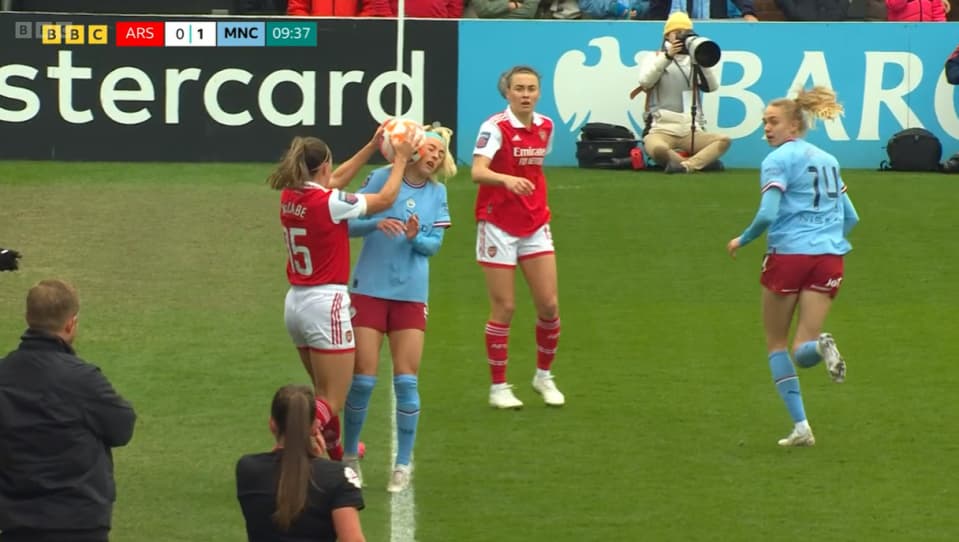
Lindsey Freeman: Soccer is a sport with a clear set of rules, but the game also has a set of practices known as “the dark arts."
Continuing Faculty, Department of Sociology and Anthropology, Faculty of Arts and Social Sciences

Sasha J. Langford and Jonathan Middleton: Disquiet Foundation: Stakeholder's Report
PhD Candidate and MFA Student, School of Contemporary Arts, Faculty of Communication, Arts and Technology 

May 27, 2026
Charlotte Hou: From 0 to 1: Why Some People See Opportunities Others Don’t
MA Student, Faculty of Communication, Arts and Technology

Shangrila Plaza: Beyond the Page, Into Sound
MA Student, Department of English, Faculty of Arts and Social Sciences

Contributors

  • Sarah Zhou Rosengard
  • Kiara Okonkwo
  • Treva Legassie
  • Shangrila Plaza
  • Lindsey Freeman
  • Hamed Rashtian
  • Sasha J. Langford
  • Jonathan Middleton
  • Charlotte Hou

Images (8)

A woman with long, light brown hair wearing black headphones sits at a radio station desk. She is smiling and holding a plush panda toy close to her chest. A white mushroom-shaped lamp and a microphone are on the table in front of her, with shelves of books and materials visible in the background. The overall setting is bright and colorful.
Aerial view of Abadan, Iran, showcasing the Shatt el Arab river flowing through the scene. To the left, the Bawarda housing estate is visible, featuring rows of houses and green spaces. In the background, industrial structures, including a large oil refinery, dominate the skyline. The image is in black and white and includes text at the top and bottom, discussing the significance of Abadan.
Abstract image featuring a dark circular shape in the center, with a textured surface and faint geometric lines intersecting. The background is a soft, muted beige, enhancing the prominence of the circular element.
A women's football match scene shows players on the field during a game. One player in a red jersey pushes the soccer ball against the face of a player in a light blue jersey. Two teammates stand nearby. The scoreboard indicates the score is Arsenal 0, Manchester City 1, and a photographer is seen capturing the action in the background. The match is being played on a green pitch with branding from a sponsor visible.
A still water feature is shown with two wooden goose sculptures floating. In the foreground, a kit titled "Gregory The Go'ose" is overlaid. The kit features a light green background with peach-colored outlines and labels for parts, detailing a citizen science project related to microplastic collecting. Behind the sculptures, a stone staircase leads up from the water. Fallen leaves are visible on the water's surface.
A grayscale image featuring a detailed ornamental border in the upper left corner, with a smooth, patterned design. The background is mostly white, exhibiting various abstract black markings that suggest smudges or streaks. In the lower right area, there is a solid black circular shape with a jagged edge.
A black mounted speaker is positioned on green grass in the foreground, facing a serene pond with fountains in the background. Palm trees are visible along the water's edge, and the sky is clear with a few clouds. People can be seen in the distance walking along the walkway beside the pond.
An aerial view of a landscape featuring a winding river and industrial structures. The image includes annotations in red handwriting, highlighting various features such as channels, construction areas, and questions about water flow and ecosystem functions. The background shows buildings and development sites.

Sarah Rosengard is an ocean scientist in the School of Environmental Science. From Queens-New York, she has had the privilege to learn from researchers and community leaders from the Amazon River Basin to the Canadian Arctic. Over the past five years, she was a professor at the Art Institute of Chicago, where she researched carbon cycling in the geoengineered Chicago River, and the role of the arts in environmental knowledge production. Now at SFU, she is eager to conduct local water research through her undergraduate classes, and bridge the arts and sciences in an urban ocean science curriculum.

Kiara Destiny Okonkwo (she/her) is a Master's student in the Communication Research for Social Change program at SFU. She has a background in journalism, community organizing, and creative writing.

Treva Legassie (she/her) is a curator, artist, and writer based in Tkarón:to (Toronto), Treaty 13 territory. Her interdisciplinary research-creation practice engages urban-natural environments; those unruly zones where city infrastructures meet living ecologies and where land resists human development and settler desires for control. Through embodied research practices she attunes to subtle environmental shifts and the layered histories embedded within landscapes, exploring how personal memory, ecological change, and colonial histories accumulate over time. Legassie has curated projects for Nuit Blanche Toronto and composed a geolocated soundwalk through the revitalized Toronto Port Lands. Legassie is a SSHRC-funded Postdoctoral Fellow at Simon Fraser University and co-director of the Curatorial Research-Creation Collective.

Shangrila Plaza is currently a second year Master’s student in English at Simon Fraser University. Their research-creation project combines critical analysis, creative writing, and multimedia to explore Metro Manila as an auditory space shaped by U.S. imperial governance and its afterlives, specifically examining how urban sounds function as material instruments of power.

Lindsey A. Freeman is a writer and sociologist interested in endurance, hapticality, atomic + nuclear cultures, and poetics. Her most recent book, Running, is about practice, love, queerness, and long-distance running (Duke University Press). Freeman is now working on a book about women’s professional soccer, queer joy, and how hard it is to care about things. She also continues to write about running culture and practices.

Hamed Rashtian is a Vancouver-based visual artist and PhD candidate at Simon Fraser University’s School of Interactive Arts and Technology (SIAT). His research-creation practice examines the built environment as a site of cultural hybridity, focusing on colonial histories, archives, and everyday life, with particular attention to the oil city of Abadan, Iran. Working across sculpture, print, video, and installation, his work translates archival research into spatial and material forms. Rashtian has held ten solo exhibitions and has participated in over 60 group exhibitions internationally, with work shown in Canada, France, Switzerland, Belgium, Iran, and the United Arab Emirates. He has also presented his research and artistic work at academic and public conferences in Canada and Europe.

Sasha J. Langford is an interdisciplinary artist who works at the intersection of sound, writing, performance, and social practice. She is a SSHRC Doctoral Fellow in the School for the Contemporary Arts at SFU. 

Jonathan Middleton is an artist, curator, and publisher working between Vancouver and Toronto. He is an MFA student in the School for Contemporary Arts at SFU.

Charlotte (Qianying) Hou is a graduate student at SFU’s AI-Human Interaction lab and a negotiation expert trained at Columbia University. She is the creator and host of "Call Me Negotiator," a bilingual cross-cultural show that bridges East and West through deep dialogue. With a professional background spanning China, Thailand, and North America, Charlotte specializes in the "0-to-1" phase of project creation. She is passionate about helping others navigate their career pivots and leverage their unique cultural identities to build impactful personal brands and communities.