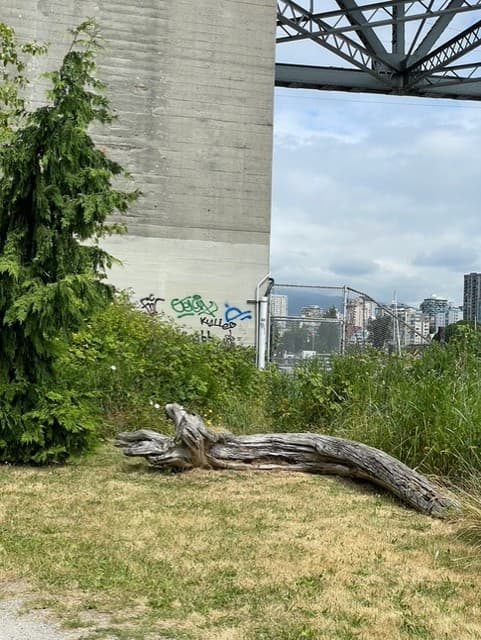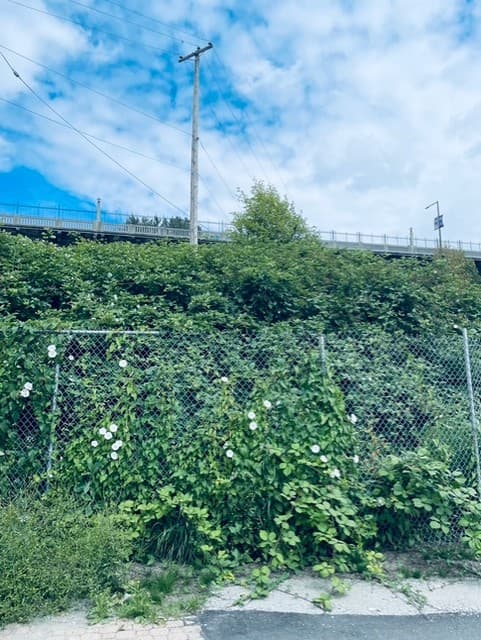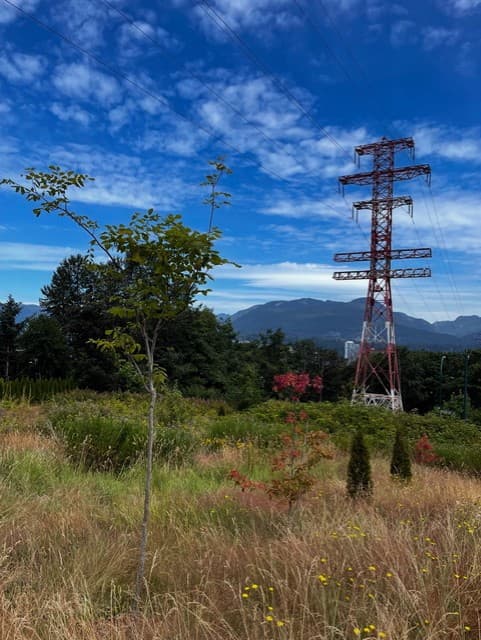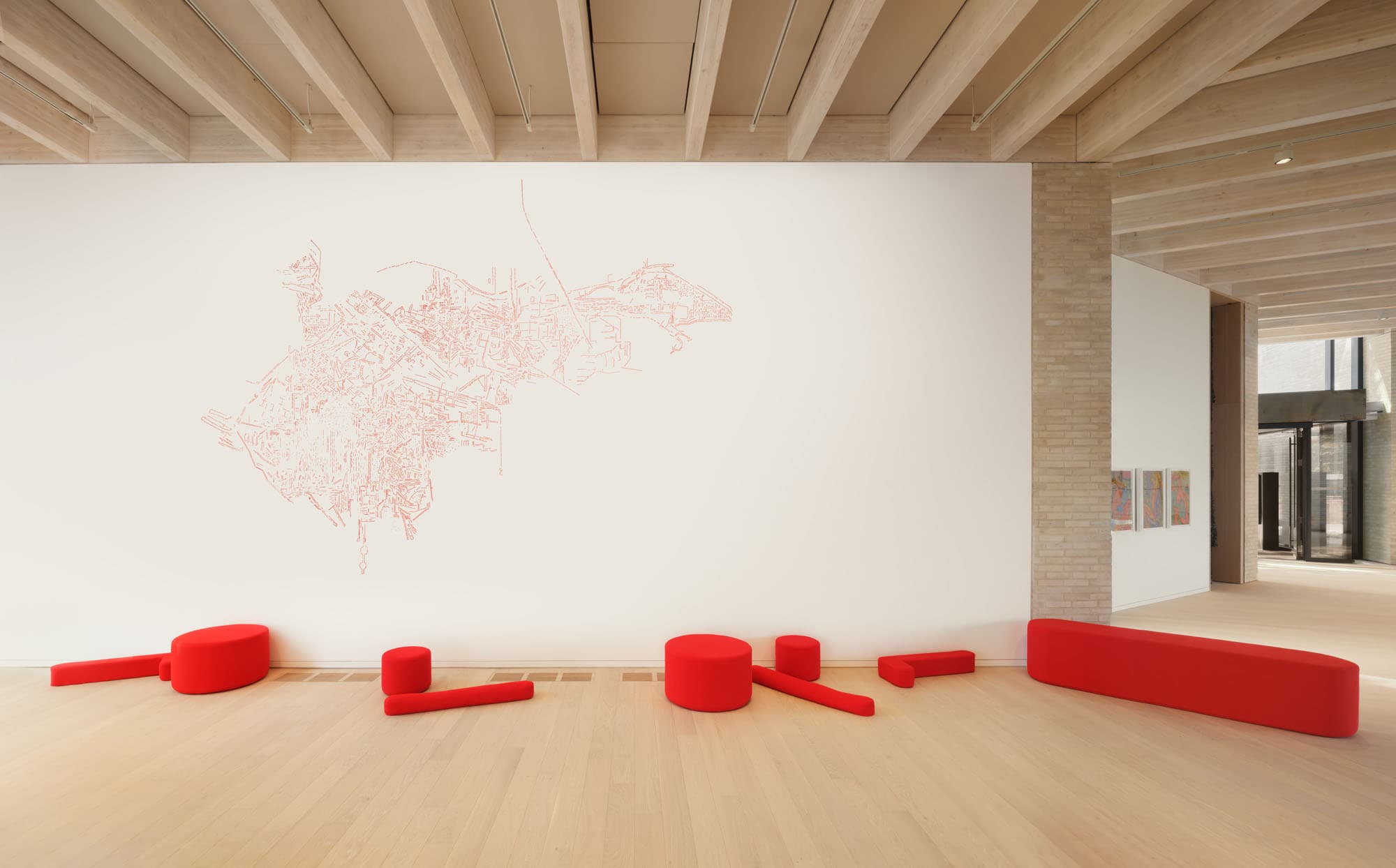
Please join exhibiting artist Lorna Brown for a live reading of several easement descriptions that were composed for audio recordings within her installation, followed by a conversation with Gibson Director Kimberly Phillips. The brief descriptions speculate upon the conditions of each easement—its flora and fauna, its history, access and egress, its volume and scale—and the imaginary possibilities of easements as workarounds to our restricted and regulated understanding of property.
Lorna Brown’s artistic practice is concerned with questions of public space, social phenomena, and institutional structures or systems. For her installation Easements in Edge Effects, Brown accessed an online resource called VanMap which allows users to download a map depicting in red every easement registered in Vancouver, thus indicating all the ways a person could traverse the city using this legal right of passage. Brown used graphics software to cluster the indicated easements together, densifying them into an image reminiscent of a medieval city. Redrawn by hand in red ink directly on the gallery wall, they suggest a community of anomalous spaces. Brown then scaled up a select number of easement shapes into soft sculptures, placing them in clustered relationships to the Gibson’s own architecture logic. In bringing these objects into direct relationship with visitors’ bodies—offering them a place to sit or lean against—the easements move from mapped abstractions to supports for imagining a city differently.
Easements can exist as long fingers of land at ground level, or they can hover overhead, as in the case of a suspended sign or elevated walkway. They might be as narrow as the width of a brick, running the length of a city lot, or L-shaped, wrapping around the corner of the property. Granting ease or relief, an easement can describe a curved seam of a garment or a curved joint in architecture.