• Visit
  • What’s On
  • Learning & Research
  • About
  • SFU Art Collection

Closed

Wednesday–Sunday, 11am–5pm

Always Free

Support the Gibson

8888 University Drive

Burnaby, British Columbia

Canada V5A 1S6

778-782-4266

Closed

Wednesday–Sunday, 11am–5pm

Always Free

VisitGetting HereAccessibilityContactShop
Learning & ResearchUniversity Students & FacultyK–12 LearningKids & Families
What's OnCurrentUpcomingArchive
AboutTeam & GovernanceSupportOpportunitiesFacility Rentals
SFU Art CollectionRecent AcquisitionsPublic Art

performance

upcoming
Jan 25, 2026, 4:00 PM–5:00 PM

Justine Chambers

(As part and crowd) time is a place

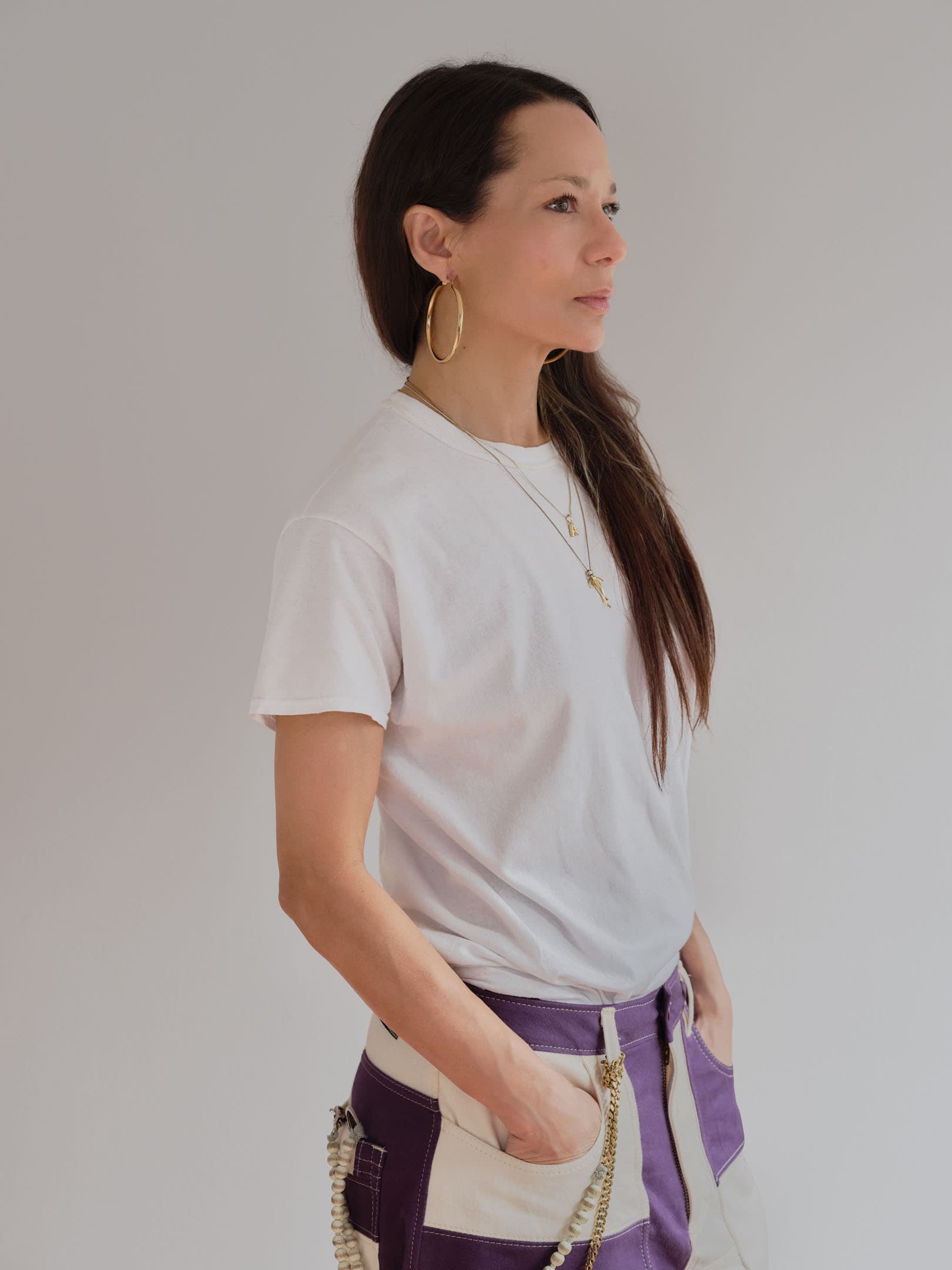
A woman in profile stands against a light gray background. She has long, dark hair and is wearing a plain white t-shirt paired with cream-colored pants that have purple sections. Large gold hoop earrings and several layered necklaces add to her outfit. Her hand rests in the pocket of her pants.
Rachel Topham Photography

Justine A. Chambers’ movement practice approaches choreography as both collaborative and cumulative, rooted in close observation of the world and focused on the body as a site of archived knowledge. She considers the improvised dances performed almost undetectably every day, particularly those that tether us to our communities and through which we assert our presence within (and despite) the systems that contain us. 

With (As part and crowd) time is a place, Chambers consider questions of time and togetherness. The work began as a response to the artist’s observations of the particularities of the Gibson’s context—a forested mountain university campus in the midst of a metropole; the not-quite completed geometries of the art museum under construction; and the Gibson’s vision and commitment to embrace many different publics. Her choreographic prompts become an exercise in considering the manifold and often turbulent ways we experience time simultaneously—as moment, as season, as epoch—together and apart from one another. Paced with the setting sun, Chambers’ scored performance lecture is framed by such questions as: How do we stay tethered to someone in a different time? What would happen if we could be autonomous in our timing but committed to accepting the friction of being together? How do we embark on shared endeavours while holding time differently?

The work’s title is drawn from the writings of the late Martiniquais philosopher Édouard Glissant, from his book The Poetics of Relation (1990). Glissant asserts the possibility of a radical togetherness within an archipelago of experience: “We know ourselves as part and as crowd, in an unknown that does not terrify. We cry our cry of poetry. Our boats are open, and we sail them for everyone.”

With gratitude to Emese Csornai, Lisa Gelley-Martin, Renee Sigouin, and Joshua Segun-Lean.

Related Programs

  • ExhibitionInaugural ExhibitionEdge Effects

Artists

  • Justine A. Chambers

Images (1)

A woman in profile stands against a light gray background. She has long, dark hair and is wearing a plain white t-shirt paired with cream-colored pants that have purple sections. Large gold hoop earrings and several layered necklaces add to her outfit. Her hand rests in the pocket of her pants.

Justine A. Chambers is a dance artist based on the unceded Coast Salish territories of the səlilwətaɬ (Tsleil-Waututh), kʷikʷəƛ̓əm (Kwikwetlem), Sḵwx̱wú7mesh Úxwumixw (Squamish) and xʷməθkʷəy̓əm (Musqueam) Nations, in Vancouver, Canada. Her practice is a collaboration with her Black matrilineal heritage and extends from this continuum and its entanglements with Western contemporary dance and visual arts practices. Her research attends to embodied archives, social choreographies, and choreography and dance as otherwise ways of being in relation. Chambers’ work has been hosted at galleries, festivals and theatres nationally and internationally. She is an Assistant Professor at the School for the Contemporary Arts at Simon Fraser University. Chambers is Max Tyler-Hite’s mother.